
Are you unsure of how to keep your Invisalign aligners clean and smelling fresh? Neglecting to care for your Invisalign clear aligners can lead to gingivitis, halitosis (bad breath), cloudy or smelly aligners, and even increased risk of cavities. The tips and tricks in this blog will teach you the best way to clean Invisalign aligners, and general Invisalign care. We will cut through the confusion, offer simple, effective, and safe methods to keep your aligners sparkling and your smile journey on track.
Why Proper Invisalign Care Matters
Properly caring for your Invisalign aligners helps to prevent unpleasant odours and tastes, bacterial build-up on aligners, cloudy or stained Invisalign aligners, and lowers the risk of gingivitis and cavities. Proper care also maintains the integrity of the aligners, as incorrect care can lead to warped and damaged aligners, affecting their fit and performance. Clean, well-fitting aligners make the Invisalign journey more comfortable and help you smile with confidence.
Your Daily Invisalign Care Routine
Step 1: Rinse – rinse your aligners under lukewarm water immediately after removing them from your mouth.
Step 2: Brush Gently – use a soft-bristled toothbrush to gently brush the inside of the aligners (where the teeth go) to remove any debris.
Expert Tip: keep a separate toothbrush just for your aligners
Step 3: Add Soap – add a small amount of non-abrasive soap (like clear antibacterial hand soap) to the toothbrush and brush aligners again. Toothpaste with baking soda or whitening properties should be avoided due to their abrasiveness.
Expert Tip: Make small circular motions with your toothbrush to get into all the little grooves
Step 4: Thorough Rinsing – Rinse off your aligners thoroughly with lukewarm water, shaking off excess water before placing in your case, or back in your mouth.
Deep Cleaning Your Aligners
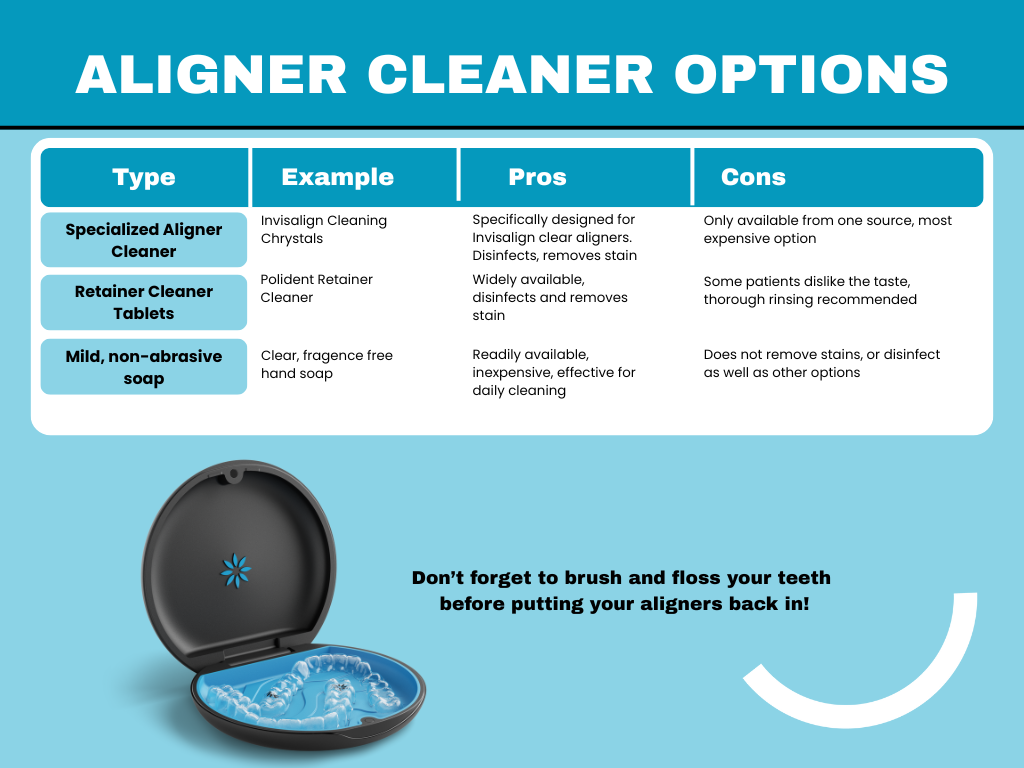
Occasionally you may want to deep clean your aligners, for example if you drop your aligners on the ground, notice a bad smell or plaque buildup. There are special cleaners that you can use to soak your aligners, such as Invisalign cleaning crystals, or Polident Retainer Cleaner.
- Fill a clean container, like a small bowl, with warm (not hot) water
- Add the cleaning crystals or tablet to the water, following product instructions
- Place aligners in container, submerging in the solution
- Allow aligners to soak for a few minutes (always follow product instructions)
- Rinse aligners thoroughly, and brush with soft-bristled toothbrush as needed
- Dispose of solution according to manufacturer's instructions
Expert Tip: Never use hot water when cleaning your aligners, as it can warp the aligners
Products to avoid and why
Abrasive Toothpaste – gritty particles in toothpaste, which act as whitening agents, can scratch the aligner material, increasing the risk of bacterial buildup
Mouthwash – aligners should not be soaked in mouthwash, as it can damage the aligner material, and may stain it
Harsh Chemicals (bleach, household cleaning products) - extremely damaging to the aligner material, and can be toxic if ingested
Hot Water – putting your aligners in hot water can warp the aligner material, causing it to not fit properly, which can affect tooth movement or cause tissue damage.
Maintaining Oral Hygiene with Invisalign
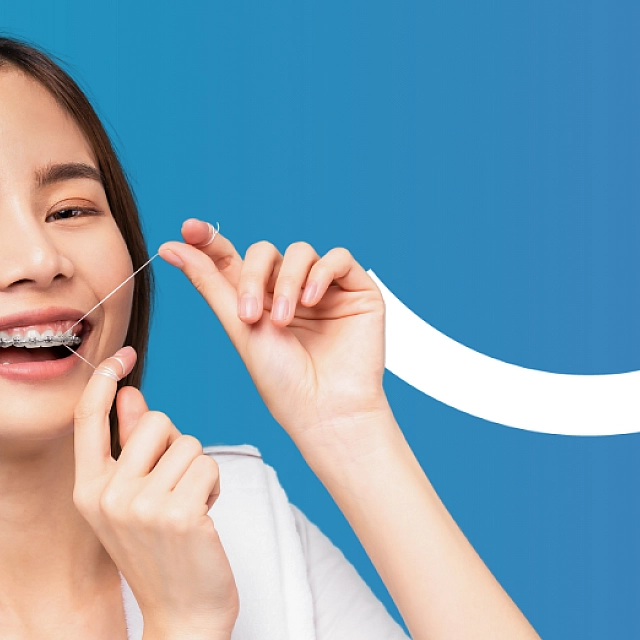
While cleaning your aligners is important, it is just as important if not more so, to ensure that you are brushing and flossing your teeth regularly during your Invisalign treatment.
Expert Tip: Thoroughly brush your teeth for 2 minutes before re-inserting your aligners, and floss at least once per day. This is crucial to prevent trapping food particles and bacteria under the aligners, which significantly increases the risk of cavities, staining, bad breath, and gum disease.
Rinsing With Mouthwash
Consider rinsing your mouth with an alcohol-free mouthwash before inserting your aligners to remove any debris that was loosened while brushing, and to fight bacterial growth.
Regular Dental Checkups
We also recommend that you continue to see your family dentist for dental checkups and cleanings throughout your Invisalign treatment.
Expert tip: Did you know that calculus or tartar buildup can interfere with teeth moving properly, and affect the fit of your aligners?
Handling, Storing, and Protecting Your Aligners
Removing aligners – always remove your aligners using equal pressure on either side of the aligner to avoid cracking or warping the aligner.
Always use your case – whenever your aligners are not in your mouth, they should be in your case. This protects them from damage or accidentally being thrown away.
Expert tip: ask your docbraces smile team for an extra case. This way you can have one that stays at home, and one that you can take with you in a purse, backpack, or briefcase.
Cleaning your aligner case – your aligner case can develop bacterial growth, especially if your aligners are not thoroughly cleaned before being placed in the case. Regularly cleaning your case with mild antibacterial hand soap or dish soap and warm water will help keep it clean and fresh.
Eating and Drinking with Invisalign
Invisalign recommends that aligners should be removed when eating and drinking anything other than plain water. Food, sugar and acidic liquid can become trapped between your teeth and the aligner, greatly increasing your risk of tooth decay, staining and aligner damage.
Troubleshooting Common Invisalign Concerns
Aligner Odour
- Cause: insufficient cleaning, not brushing before reinserting, not cleaning aligner case causing bacterial buildup
- Solution: improve daily brushing and care routine, soak aligners in Invisalign cleaning crystals or retainer cleaner tablets, clean aligner case
Aligner discolouration/cloudiness
- Cause: staining from food/drinks, inadequate cleaning, smoking with aligners in place
- Solution: Avoid smoking with aligners, avoid eating or drinking anything other than water with aligners in place, soak aligners in Invisalign cleaning crystals or retainer cleaner tablets, clean aligner case
Minor aligner damage (cracks or fissures)
- Cause: improper removal, eating with aligners in, accidental or intentional bending of aligners, using abrasive cleaners
- Solution: handle your aligners with care, and always follow your Orthodontist’s recommendations
Invisalign Do’s and Don’ts, and Expert Invisalign Tips from the Orthodontic Professionals at docbraces
- “Have an extra case to carry with you on the go, that way you don’t have to worry about forgetting your case at home.” - Cindy, Dental Assistant
- “Keep aligner cases away from dogs, they will chew through a case and your aligner!” - Cathie, Treatment Coordinator
- “Keep a separate toothbrush for your aligner (and case), and one for your teeth.” - Michelle, Dental Hygienist
- “Never wrap your aligner in a paper towel or napkin – you wouldn’t believe how many get thrown in the garbage by accident!” - Barb, Dental Hygienist
- Always follow your orthodontist's specific instructions, as they may have tailored advice for your case
Long-Term Benefits of Diligent Aligner Care
Clean, well-cared for aligners maintain their intended fit and effectiveness, protecting your investment and ensuring you keep your smile bright. Establishing good oral hygiene habits now will prepare you for a lifetime of a healthy smile.
Common Myths and Misconceptions
Myth 1: I can just use my regular toothpaste for cleaning Invisalign trays.
Fact: Many toothpaste varieties contain micro abrasive bits or whitening agents which can be abrasive to aligners.
Myth 2: Hot water cleans aligners better
Fact: Hot water, even just running your aligners under it, can warp or distort the aligner. Always avoid hot water!
Myth 3: I don’t need to brush my aligners; I can just soak them in mouthwash.
Fact: Mouthwash will not remove plaque or food debris from your aligners, and may stain them.
Myth 4: I don’t need to remove my aligners when I am drinking
Fact: Drinking sugary or acidic beverages with your aligners allows these cavity causing agents to pool around your teeth. Drinking sugary drinks with aligners in place has been known to cause extensive tooth decay.
Tips For Your Invisalign Journey
Travelling
- Remember to pack an aligner case, extra toothbrush and aligner cleaner
- When travelling by plane, always put your aligners in your carry-on bag, not checked luggage
- If you are travelling to a country where you shouldn’t drink the water, use bottled water for brushing, and cleaning your aligners
- If you cannot brush right after eating while you are on the go, simply use the restroom and rinse your mouth and aligners thoroughly with water. You can do a thorough cleaning once you are back at your accommodations
Eating Out
- Never wrap your aligners in a napkin or paper towel, they often get thrown out by accident
- Find a discreet place to remove your aligners, such as your car before you go in, or the restroom
- If you cannot brush right after eating, simply use the restroom and rinse your mouth and aligners thoroughly with water. Remember to brush and floss well when you get home!
Illness:
- Always change your toothbrush for a new one after being sick with a cold or flu, that goes for your aligner brush too!
- Continue to wear your aligners as prescribed by your Orthodontist, if possible, but reach out to us if you don’t feel this is possible, and we can advise you on what to do
- Drink plenty of water to keep hydrated
- Thoroughly clean your aligners with mild anti-bacterial soap after you have been ill
Eco-friendly Invisalign Tips
- Consider using toothbrushes with handles made of sustainable materials, such as bamboo
- Purchase antibacterial hand soap in recyclable refill containers rather than using cleaning tablets which are individually wrapped in non-recyclable material
- Conserve water while you are brushing, and cleaning your aligners by turning off the tap unless you are rinsing
Conclusion: Keeping Your Smile On Track
By following our daily care routine and following your Orthodontist’s instructions, your Invisalign treatment will be smooth and rewarding. Being consistent and mindful of caring for your aligners in the beginning will help these tasks become a habit.
Ready to get started on your own Invisalign journey? Find a docbraces location nearest you and request a complimentary consultation.
Frequently Asked Questions
What is the 22-hour rule for Invisalign? This refers to the amount of time aligners should be on your teeth with Invisalign. They should be worn all the time, except eating, drinking, brushing, and flossing.
How do I survive the first week of Invisalign? Wearing aligners may feel strange at first but wearing them consistently will help you adapt quickly and with minimal effort.
Can I swim with Invisalign on my teeth? Yes! All Invisalign aligners are custom made for a snug, reliable fit, so there is no worry about them falling out.
Do I sleep with Invisalign on? Yes, absolutely! In fact, the best time to switch to a new set of aligners is before bed – it gives the aligners all night to move the teeth without interruption.
How do you protect your enamel with Invisalign? The best way to protect enamel is to keep clean Invisalign aligners and brushing after each meal before reinserting your enamel. Always remove your aligners when you are drinking any sugary or acidic beverages.
How to clean Invisalign retainers? Follow our handy guide above on how often to clean Invisalign, the best way to clean Invisalign trays and proper Invisalign care. All you need is a toothbrush and some mild soap!
What is the best way to clean Invisalign trays? Cleaning with a toothbrush and mild antibacterial hand soap is an effective cleaning method, and there are also specific aligner and retainer cleaners that you can use – always make sure to follow the retainer cleaner or Invisalign crystal instructions for use.
Note: specific products named in this blog are examples, and are not endorsed by docbraces