

Are you or your child new to having braces on teeth? While getting braces is exciting - especially once the changes in your teeth start showing - it often comes with a lot of questions about what to eat, braces and dental care, and braces how to take care of them properly.
This handy braces care guide offers clear, expert-backed advice on everything you need to know for complete braces oral care. We’ll cover tools (including a simple braces care kit), step-by-step cleaning techniques, food do’s and don’ts, and common issues that may arise - so you can build a consistent braces care routine.
By following our helpful guide and tips, you’ll gain the confidence to maintain great braces teeth care, avoid painful problems, protect your investment in a healthy smile, and make your braces journey smoother and more comfortable.
Why Braces Care Is Crucial for Your Smile Journey
Proper orthodontic care matters because braces create more surfaces where food and plaque can collect. If you’re wondering what happens if you don't take care of your braces, here are the most common risks:
Increased risk of cavities and decay around brackets and wires
Potential for gum inflammation (gingivitis) and other periodontal issues, including bone loss
Damage to braces (broken wires, loose brackets), which can lead to treatment delays (maintaining braces helps keep treatment on track)
Staining or discolouration of teeth
Bad breath (halitosis)
Cleaning around braces takes a little more time and attention, but it’s the best way to clean braces, reduce plaque, and keep your smile healthy. The goal of treatment isn’t only straight teeth - it’s healthy teeth and braces dental care results and a confident smile after braces.
Essential Tools for Braces Care Success (Best Products for Braces Care)
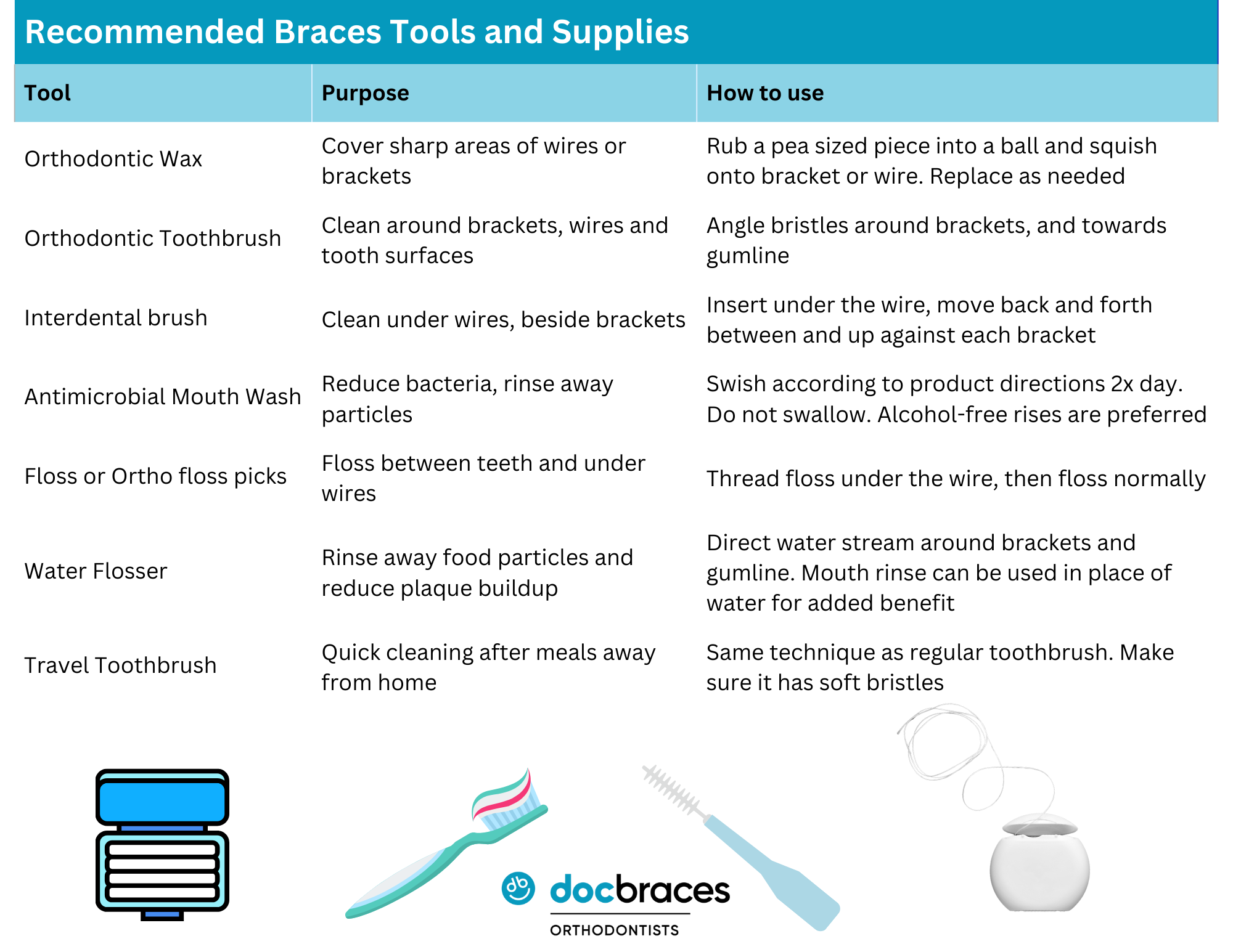
Choosing the right gear makes care for braces much easier day-to-day. Consider this your quick checklist of braces care products and oral care products for braces - many patients keep these in a dental braces care kit or braces care kit:
Soft-bristle toothbrush – orthodontic toothbrushes are available that are V-shaped to contour around brackets, but a regular toothbrush also works well when angled above and below the braces.
Interdental brush / proxabrush – great for cleaning braces under wires and beside brackets.
Orthodontic floss or floss threaders – the stiff end guides floss under the wire to reach the gums.
Water flosser – helpful for flushing food particles from hard-to-reach areas.
Orthodontic wax – protects cheeks/lips from irritation.
Antimicrobial mouthwash – supports mouthwash braces care by reducing bacteria that causes plaque.
Travel toothbrush – essential for meals on the go, especially braces care at school or work.
Pro tip (products): If floss threaders feel tricky, many patients like special dental picks, such as Plackers Ortho Flossers as a convenient option for flossing.
Mastering Flossing with Braces (How to Take Care of Braces)
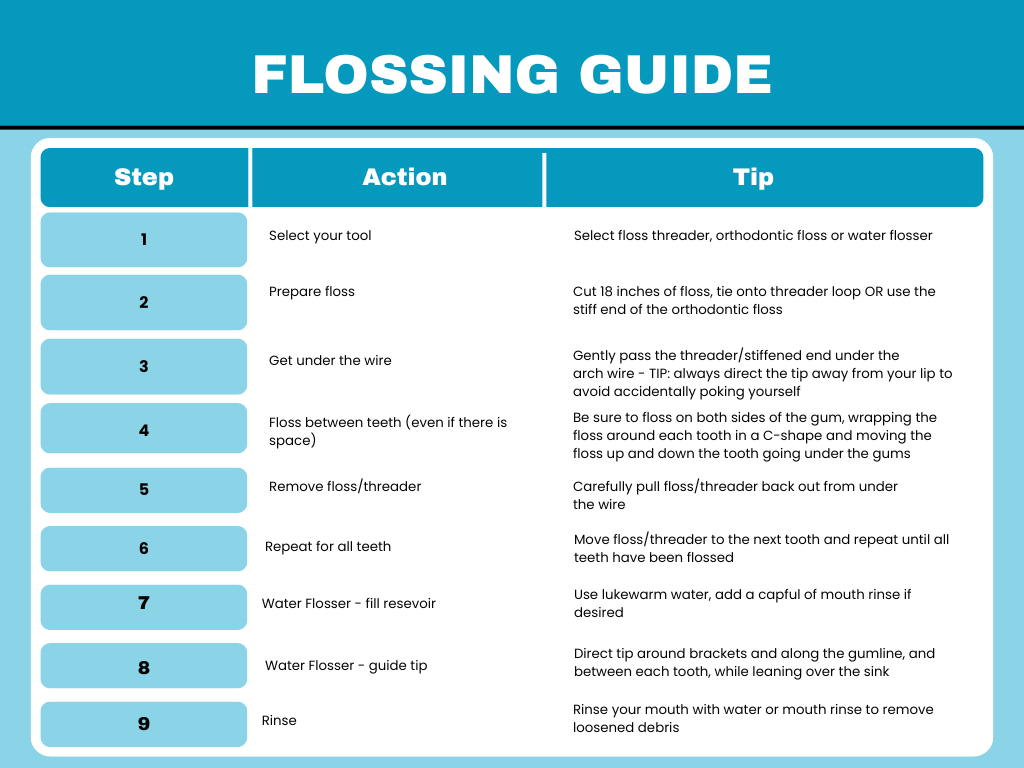
Flossing is a non-negotiable part of dental care for braces because it reaches areas toothbrushes can’t. If you’re searching for how to care for braces or how to care for dental braces, flossing daily is one of the most important habits for keeping teeth clean with braces.
The following chart and video are a step-by-step guide to flossing care with braces.
Step-by-Step Guide: How to Brush Effectively with Braces
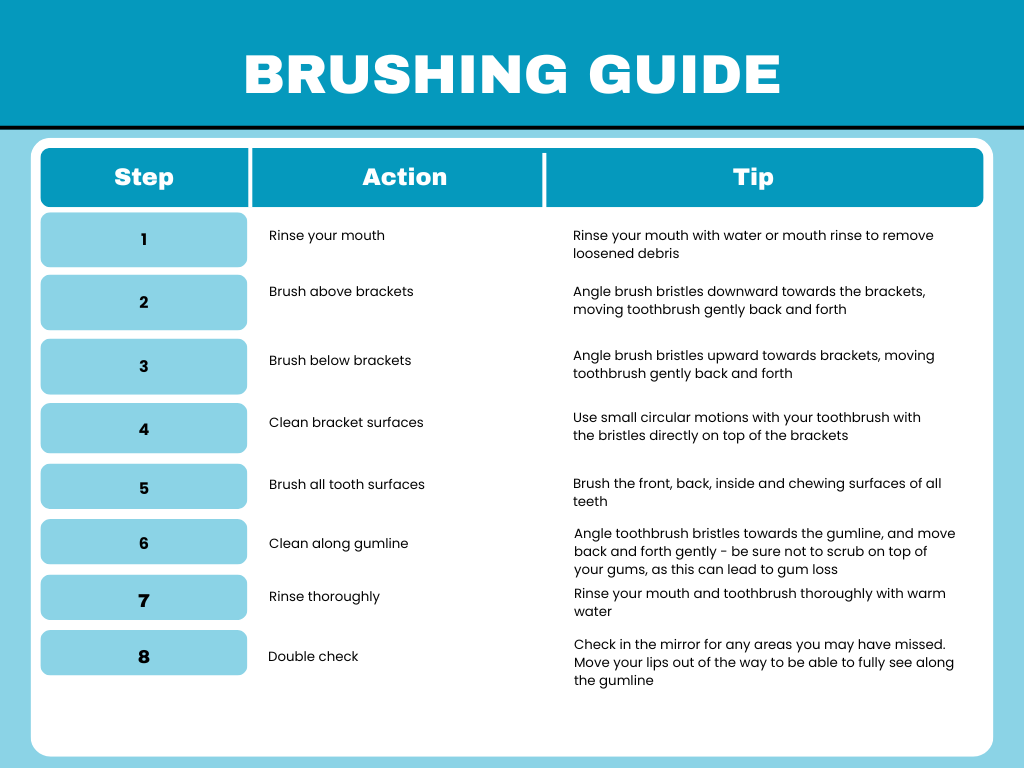
With braces on, it’s important to brush after each meal or snack. This is the heart of taking care of braces and taking care of teeth with braces.
Here are some tips to help build a reliable braces care routine:
Keeping Braces Clean: A Simple Daily Routine
If your goal is keeping braces clean and preventing staining, this quick plan helps:
Morning: brush + floss (or threader/flossers) + rinse
After meals/snacks: brush if possible, or rinse and use a proxabrush
Night: full brush + floss + rinse (most important session of the day)
This routine makes teeth cleaning with braces easier and reduces the chance of white spots, cavities and gingivitis.
Navigating the Braces Diet: Food Restrictions and Guidelines
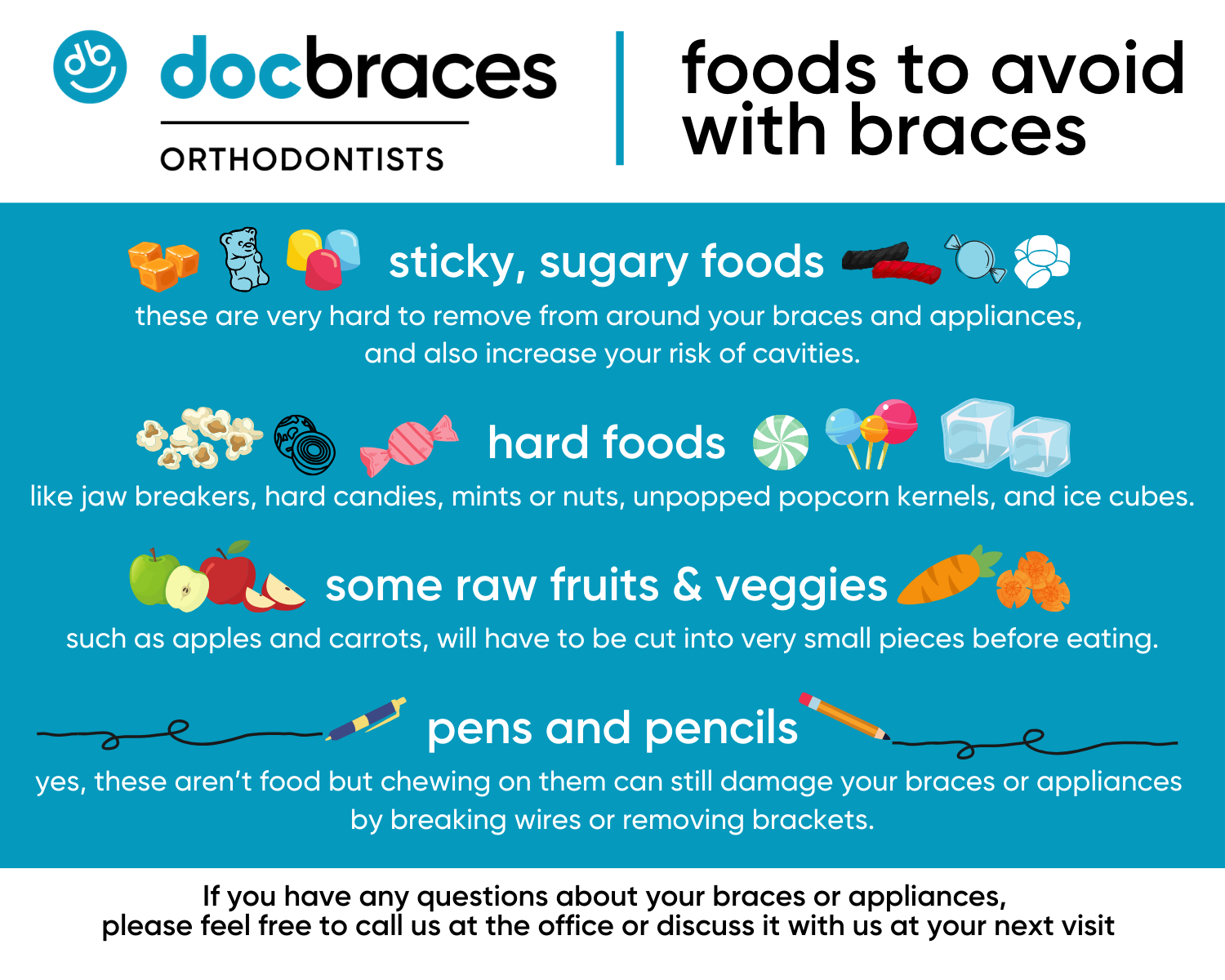
There are a few simple rules to follow when eating with braces to protect your brackets and wires: avoid hard foods, sticky foods, and biting into large pieces of food with your front teeth. This is important for maintaining braces and avoiding delays.
Dealing with Common Problems and Emergencies
During treatment, it’s normal to have some soreness when biting down, occasional sore spots from rubbing, or a wire that shifts and pokes. Many concerns can be managed at home, and we’ve prepared a handy guide on what to do.
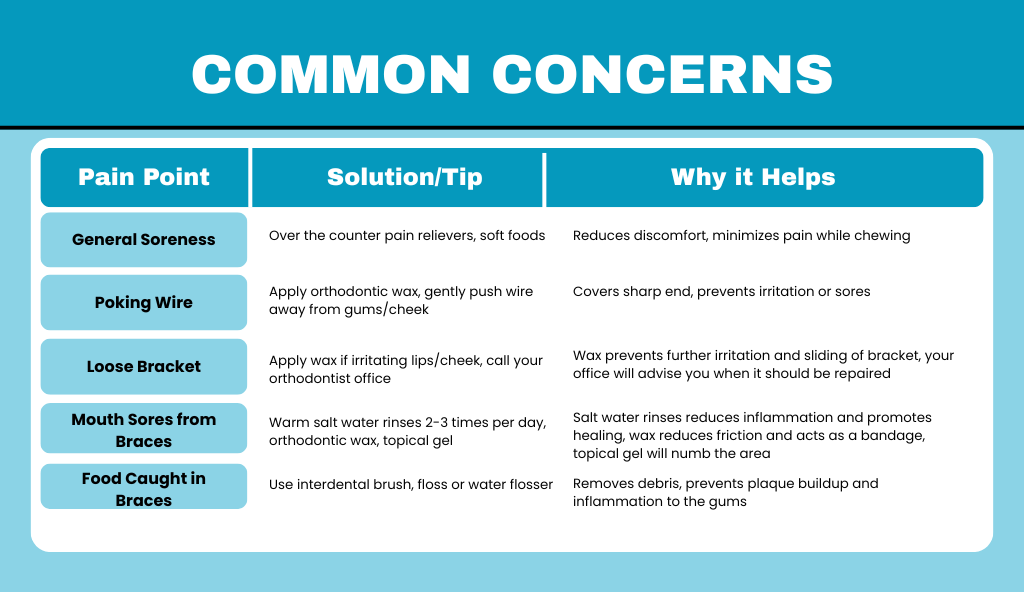
We also have some helpful videos to show you how to manage these concerns at home.
Using wax:
What to do about a poking wire:
What to do if a bracket comes loose from your tooth:
Braces Care at School, Work, and On the Go
Braces care at school can be simple with a small braces care kit (or dental braces care kit) and these handy tips:
Create a portable braces care kit with a travel toothbrush and toothpaste, proxabrush, floss, and wax to keep in a backpack, lunch bag, or travel bag
Consider keeping some pain reliever, such as Ibruprophen, on hand as well
If you are not able to brush your teeth after your meal, be sure to rinse well with water or use a proxabrush until you are able to complete a full cleaning at home
Proxabrushes are an essential tool to keep with you for meals on the go - you can quickly excuse yourself after eating, and use the proxabrush in the restroom to remove any food particles that are stuck in your braces
Expert Tip: If you find yourself without wax and are in need of something to help with irritation from a bracket, the wax coating of Babybel cheese can be used in a pinch, or a small piece of sugarless gum
Importance of Regular Orthodontic Appointments
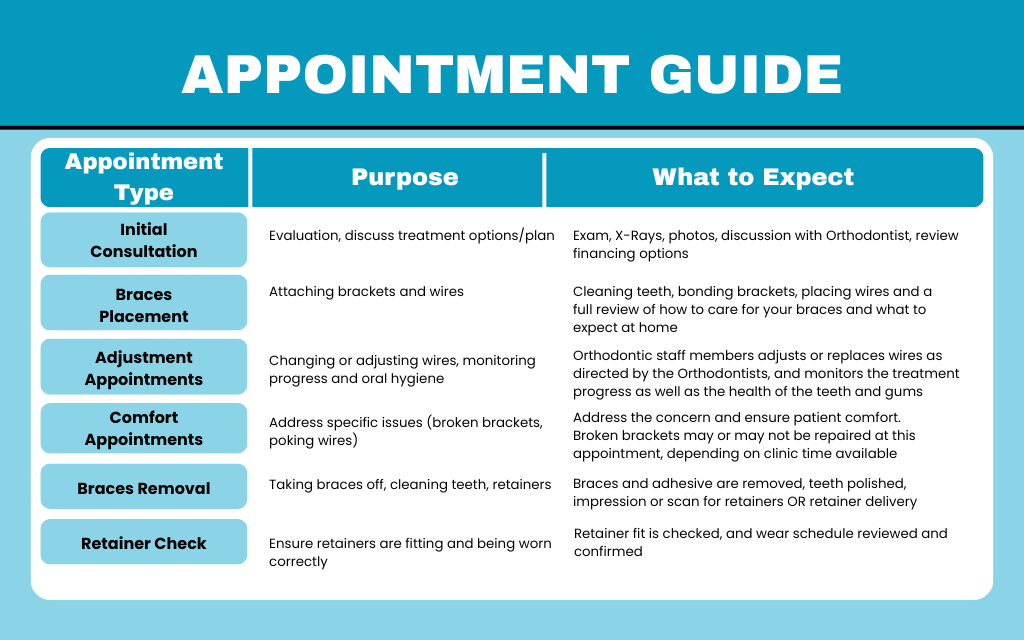
Attending scheduled visits is key to successful orthodontic care. Each appointment ensures braces are working properly, wires are adjusted/reactivated, and your team can support your braces and dental care routine with hygiene coaching.
Missing or delaying appointments can lead to treatment delays, as it is important for your Orthodontist to monitor your progress and be able to make adjustments as your teeth shift.
Here is what you expect during your braces appointments:
Caring for Teeth After Braces: Retainers and Aftercare
After braces come off, you enter retention. Proper care after braces keeps your smile stable and protects your investment in your new smile.
Retainer Care After Braces (How to Care for Retainers After Braces)
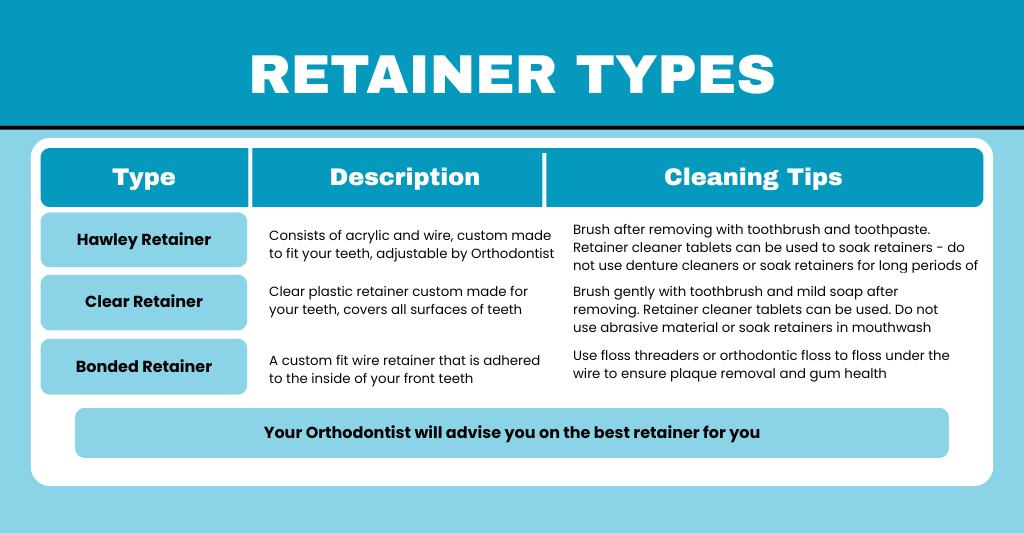
Retainers help maintain your new docbraces smile by keeping teeth in position. Your orthodontist will tell you how long to wear them and provide instructions for retainer care after braces, including how to clean and store them.
If you’re looking for braces after care guidance, the most important part is consistency: not wearing retainers can cause relapse, where teeth shift - so good after braces habits matter. Your Orthodontist will advise you on which type of retainer is best for you and your teeth.
Teeth After Braces
Most patients love seeing their teeth after braces, but oral hygiene is so important in making sure your smile looks its best when your braces come off.. If teeth after braces not taken care of (or if hygiene was poor during treatment), people may notice:
Staining/white spot lesions (early enamel damage)
Ongoing gum inflammation
Sensitivity
If you’re worried about damaged teeth after braces, ask your docbraces team about how to prevent it and what you can do to improve your oral hygiene during treatment.
Cost & Coverage Note
Some families ask about canadian dental care plan braces. Currently, the Canadian Dental Care Plan does not cover orthodontic treatment, however we have flexible payment plan options to help you achieve your dream smile!
Conclusion: Commitment to a Healthy, Straight Smile
Caring for braces takes a little extra effort, but building a consistent braces care routine using the best products for braces care helps ensure your journey is as smooth as possible. With the right daily habits, you’ll protect your teeth during treatment and enjoy a healthier, more confident smile after braces.
If you’re thinking of starting your smile journey, our expert Orthodontists and teams will be happy to help. Book a free consultation today! You can also check out our handy guide on what to expect the day your braces go on.
FAQ
Emergency & Problems
What should I do if a wire is poking my cheek? As your teeth move it is normal for the wire to shift slightly, which may cause some discomfort. Use a piece of orthodontic wax to cover the end of the wire that is poking your cheek. You can find more helpful tips on our Poking Wire Quick-Fix Page
Is it normal for my braces to hurt? It is completely normal for your teeth to be tender when biting down and chewing as your teeth are moving, especially the first couple of days after your braces are adjusted or a new wire is placed. Eat soft foods, and take an over the counter pain reliever as needed.
What happens if a bracket comes loose? A loose bracket can be irritating to patients, as it can move around on the wire. You can place some orthodontic wax onto the bracket to cover the edges and reduce its movement. Call your orthodontic office and they will advise you when you should come in. You can find more helpful information on our Broken Bracket Quick-Fix Page
Daily Care Routine
How often should I brush with braces? It is important to brush after each meal and snack with braces to prevent plaque buildup, cavities, white spots and gum inflammation.
Do I really need to floss every day? Yes! Flossing is very important during your braces journey, as there are more spots for food and plaque to get trapped.
Can I use a water flosser instead of traditional floss? A water flosser is a great addition to your braces care routine, but it should not replace traditional flossing.
Foods & Diet
What foods should I avoid with braces? You should avoid hard, crunchy foods, sticky, sugary foods, and anything that you have to bite pieces off with your teeth, such as apples or corn on the cob.
Can I ever eat popcorn or sticky candy again? It is best to avoid these foods while your braces are on to avoid cavities and gum inflammation. Once your braces are removed you will be able to enjoy your favourite snacks again.
Lifestyle & Practical
How do I clean my braces at school? It is recommended that you carry a braces care kit with you so that you can brush your teeth after lunch at school. If you forget your kit, be sure to rinse your mouth thoroughly with water after eating, and brush well when you get home.
How often do I need orthodontic appointments? Typically you will be seen anywhere between every 6-12 weeks, depending on what stage you are in with your braces. Your orthodontist will advise you on when it is best to be seen next, and this may change throughout your treatment.